
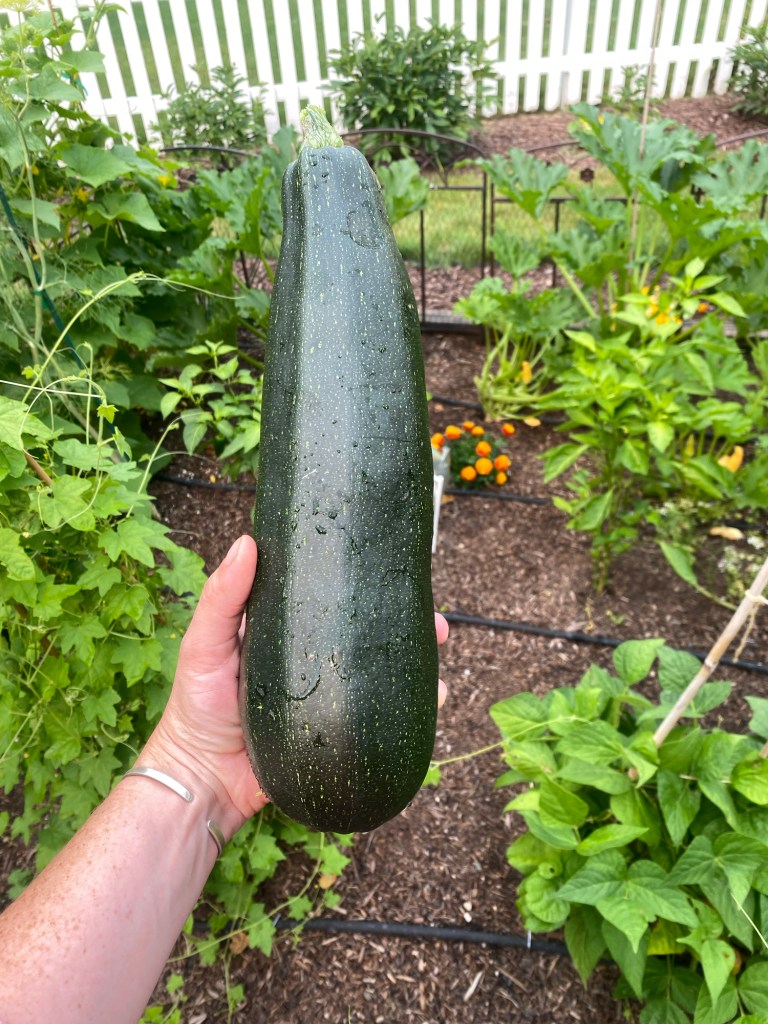
There’s something so satisfying about stepping into the garden on a summer morning and finding a zucchini that seems to have doubled in size overnight. Zucchini is one of the most rewarding vegetables to grow, but it can also come with a few challenges along the way. With a little attention to pollination, pest prevention, and plant care, you can enjoy baskets full of homegrown zucchini all season long.
Start with Healthy Plants
Zucchini thrives in full sun and rich, well-draining soil. Give plants plenty of room to spread, good airflow between plants, and consistent watering at the base of the plant. Healthy plants are naturally more resilient to pests and disease.
Understanding Zucchini Pollination
One of the most common frustrations gardeners face is watching tiny zucchini fruits shrivel up and fall off. Often, poor pollination is the culprit.
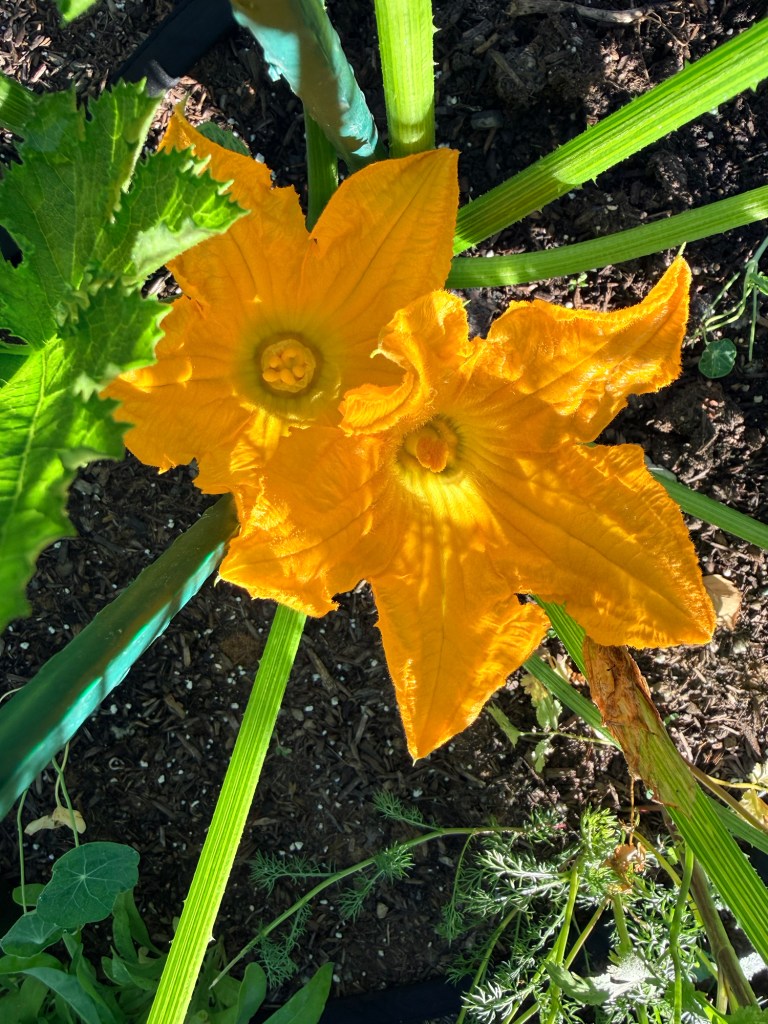
Zucchini plants produce both male and female flowers. Male flowers grow on long stems, while female flowers have a tiny zucchini fruit at their base. Bees typically move pollen from the male flowers to the female flowers, but sometimes weather, lack of pollinators, or timing can interfere. You can tell if the plant needs help pollinating by looking at the tiny fruits— if they are dying off before growth, then they need some extra help.
How to Hand Pollinate
If your zucchini fruits are failing to develop, hand pollination is a simple solution:
- Pick a freshly opened male flower in the morning.
- Remove the petals to expose the pollen-covered center.
- Gently rub the pollen onto the center of an open female flower.
You can also use a small paintbrush to transfer pollen. It only takes a minute and can dramatically increase your harvest.
Common Zucchini Pests to Watch For
Squash Bugs
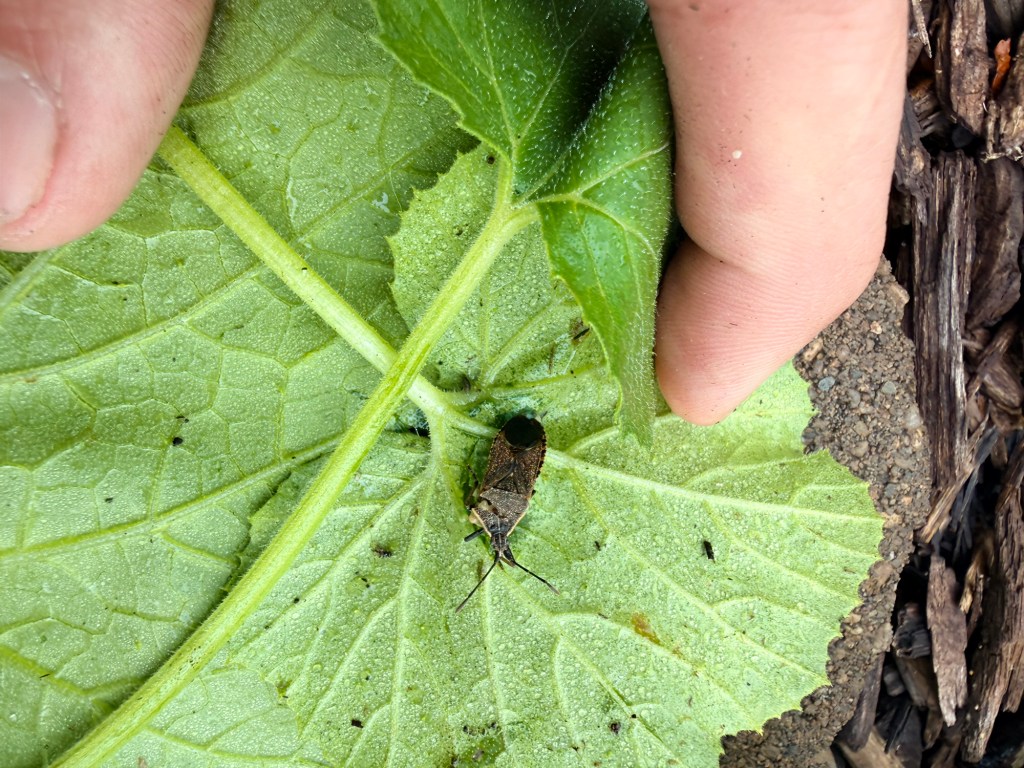
Squash bugs are one of the most destructive pests for zucchini plants. They are also the most common pest that is easily identifiable. Adults are grayish-brown and often hide under leaves.
Signs of squash bugs:
- Yellow or brown spots on leaves
- Wilting plants
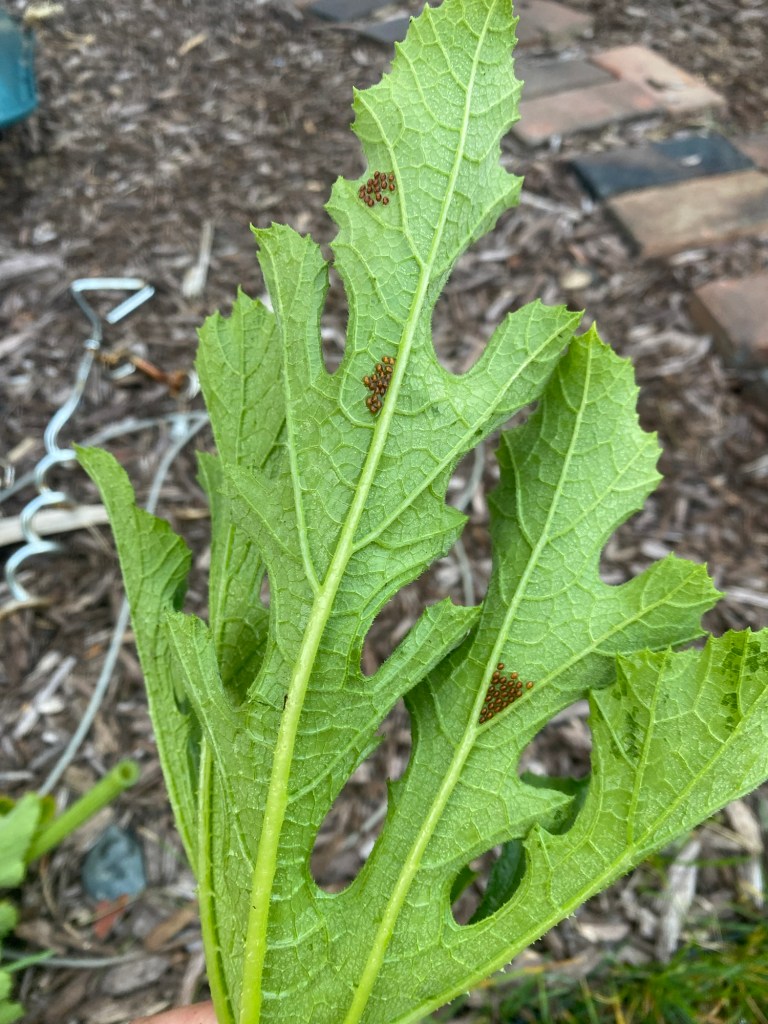
- Clusters of bronze-colored eggs on leaf undersides
Prevention:
- Check leaves regularly and crush eggs when found.
- Remove plant debris where bugs can hide.
- Use row covers early in the season until flowering begins.
Cucumber Beetles
These small yellow beetles with black stripes or spots feed on leaves and flowers while spreading disease.
Prevention:
- Use row covers when plants are young.
- Plant flowers nearby to attract beneficial insects.
- Inspect plants often and hand-pick beetles when possible.
Aphids
These tiny insects gather on stems and leaf undersides, sucking plant sap.
Prevention:
- Encourage ladybugs and lacewings.
- Spray plants with a strong stream of water.
- Avoid over-fertilizing with nitrogen.
Caring for the Plants
As zucchini plants mature, their large leaves can quickly create a dense canopy around the base of the plant. While those leaves are important for photosynthesis, removing a few of the oldest lower leaves can greatly improve the health of your plant.
Benefits of Pruning
Improves Airflow
Dense foliage traps moisture, especially after rain or morning dew. Better airflow helps leaves dry more quickly and reduces the conditions that fungal diseases love.
Helps Prevent Disease
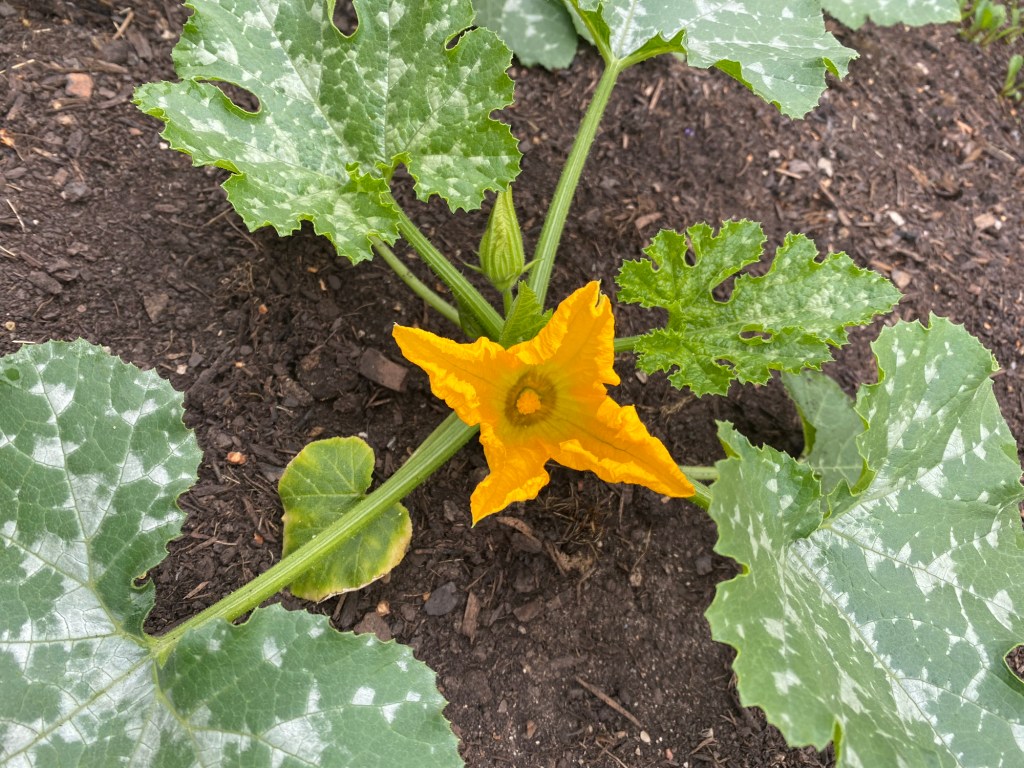
Removing yellowing, damaged, or diseased leaves lowers the chance of issues like powdery mildew spreading throughout the plant. It also prevents soil-borne diseases from splashing onto lower leaves during watering or rain. (There are some varieties that have color in their leaves that look like mildew—like the picture below— so know keep that in mind when looking out for mildew.)
Makes Pest Inspection Easier
When the base of the plant is less crowded, it’s much easier to spot squash bug eggs, vine borer damage, and other pest problems before they become severe.
Improves Harvesting
Pruning back a few lower leaves allows you to easily see and harvest zucchini before they grow into giant baseball bats overnight.
How to Prune Zucchini Plants
Using clean, sharp pruners, remove the oldest leaves closest to the ground, cutting them off at the base of the stem. Focus on:
- Yellowing or damaged leaves
- Leaves touching the soil
- Leaves showing signs of disease
- A few of the largest lower leaves that are crowding the center of the plant
Avoid removing too many leaves at once. The plant still needs plenty of healthy foliage to produce energy and continue growing. A good rule of thumb is to remove only a few leaves at a time and never strip the plant bare.
When pruning, try to do so on a dry day to allow the cuts to heal quickly and reduce the risk of disease entering the plant.
A little pruning throughout the season can make a big difference in keeping your zucchini healthy, productive, and easier to care for.
How to Deter Squash Vine Borers
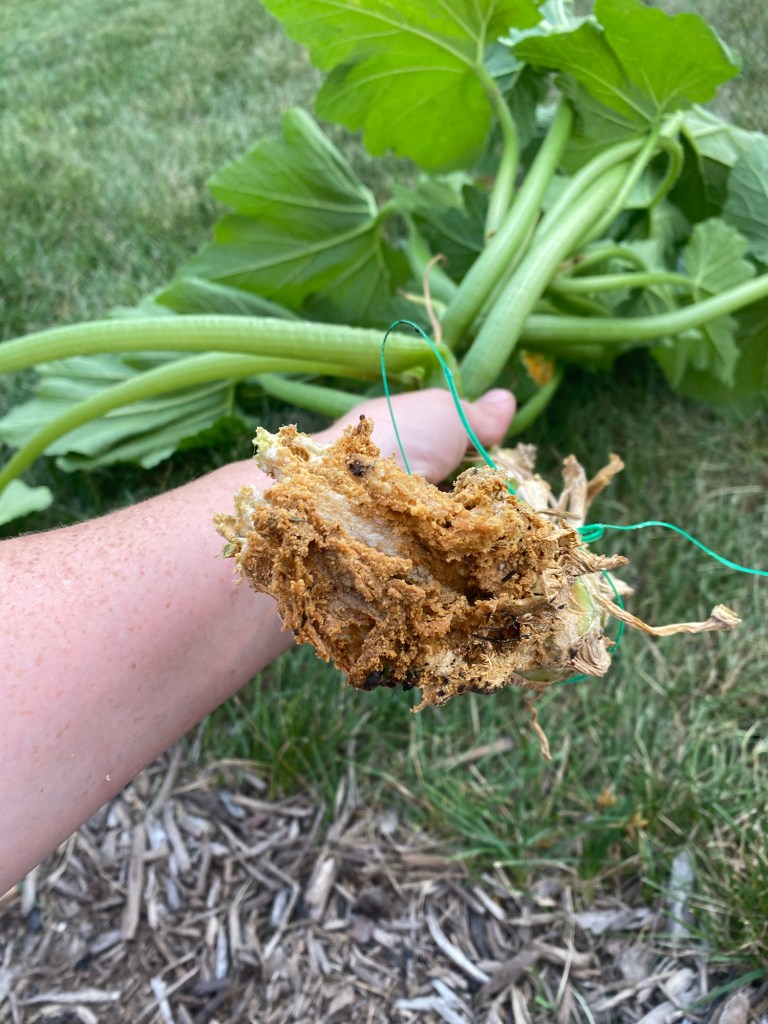
If you’ve ever had a healthy zucchini plant suddenly wilt and collapse, squash vine borers may be to blame. These guys are the bane of my existence.
The adult moth lays eggs near the base of squash plants. Once hatched, the larvae burrow into the stem, cutting off the plant’s ability to transport water and nutrients.
Tips to Prevent Vine Borers
Wrap the Stem
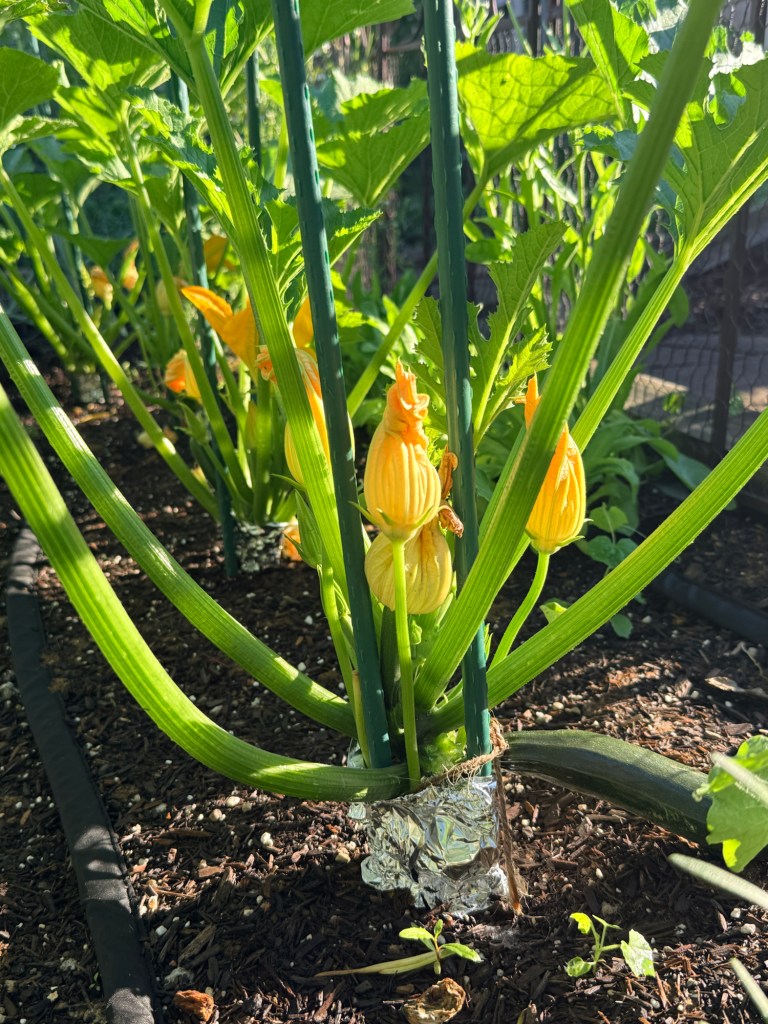
One of the simplest preventative measures is wrapping the lower few inches of the stem with aluminum foil, garden tape, or a section of pantyhose. This creates a barrier that makes it difficult for borers to lay eggs on the stem.
Cover the Base with Soil
As zucchini plants grow, gently mound soil around portions of the stem. This encourages additional roots to form and helps the plant survive if part of the stem becomes damaged.
Inspect Often
Check the base of plants regularly for reddish-brown eggs. Removing them before they hatch is much easier than dealing with larvae inside the stem.
Use Row Covers Early
Floating row covers can prevent adult moths from reaching plants. Just be sure to remove covers once flowering begins so pollinators can access the blooms.
Plant Successions
Consider planting a second round of zucchini a few weeks after your first planting. If vine borers affect your early plants, you’ll still have younger plants ready to produce later in the season.
A Few Final Tips for Success
- Water deeply at the base of the plant rather than overhead.
- Harvest zucchini when fruits are 6–8 inches long for the best flavor and continued production.
- Pick regularly to encourage more fruits to develop.
- Plant flowers nearby to attract pollinators and beneficial insects.
- Keep leaves dry whenever possible to reduce disease pressure.
Gardening is rarely about perfection. Some years the pollinators are plentiful, and some years the squash bugs seem determined to move in. But with a little observation and care, zucchini can become one of the most generous crops in your garden—providing fresh meals, extra loaves of zucchini bread, and plenty to share with family and friends all summer long.
Have you tried growing zucchini? I’d love to hear what has worked for you!
Be sure to follow along on Instagram and Facebook for more homemaking tips.
Xo,
Holly

